By using this site, you agree to the Privacy Policy and Terms of Use.
Accept
BGTNBGTNBGTN
  • Home
  • BRICS
    • B – Brasil
    • R – Россия (Rossiya)
    • I – भारत (Bhārat)
    • C – 中国 (Zhōngguó)
    • S – South Africa
    • BRICS Plus
      • A – Argentina
      • E – مصر (Misr)
      • E – ኢትዮጵያ (Ityop’iya)
      • I – ایران (Irān)
      • S – السعودية (Al-Su’udiyya)
      • U – الإمارات العربية المتحدة
    • BRICS Partner States
      • A – الجزائر
      • B – Bolivia
      • B – Беларусь
      • C – Cuba
      • K – Қазақстан
      • I – Indonesia
      • M – Malaysia
      • N – Nigeria
      • T – ประเทศไทย
      • T – Türkiye
      • U – Uganda
      • U – Oʻzbekiston
      • V – Việt Nam
  • International
  • Sports
  • Features
    • Saudi Vision 2030
    • Business and Finance
    • Technology and Trends
    • Arts and Culture
    • Health and Lifestyle
    • Food and Agriculture
    • Travel and Exploration
    • BGTN Cares
  • Weather
Reading: Chinese researcher pushes US ahead in race to build ultra-precise nuclear clock
Share
Font ResizerAa
Font ResizerAa
BGTNBGTN
  • Brasil
  • Россия (Rossiya)
  • भारत (Bhārat)
  • 中国 (Zhōngguó)
  • South Africa
  • Argentina
  • مصر (Misr)
  • ኢትዮጵያ (Ityop’iya)
  • ایران (Irān)
  • السعودية (Al-Su’udiyya)
  • الإمارات العربية المتحدة
  • الجزائر
  • Bolivia
  • Беларусь
  • Cuba
  • Қазақстан
  • Indonesia
  • Malaysia
  • Nigeria
  • ประเทศไทย
  • Türkiye
  • Uganda
  • Oʻzbekiston
  • Việt Nam
  • Home
  • BRICS
    • B – Brasil
    • R – Россия (Rossiya)
    • I – भारत (Bhārat)
    • C – 中国 (Zhōngguó)
    • S – South Africa
    • BRICS Plus
    • BRICS Partner States
  • International
  • Sports
  • Features
    • Saudi Vision 2030
    • Business and Finance
    • Technology and Trends
    • Arts and Culture
    • Health and Lifestyle
    • Food and Agriculture
    • Travel and Exploration
    • BGTN Cares
  • Weather
Follow US
  • Terms and Conditions
  • Privacy Policy
© 2024 BRICS Global Television Network. Newshound Media. All Rights Reserved.
BGTN > Features > Technology and Trends > Chinese researcher pushes US ahead in race to build ultra-precise nuclear clock
Technology and TrendsBRICS中国 (Zhōngguó)

Chinese researcher pushes US ahead in race to build ultra-precise nuclear clock

Reporter
Last updated: July 12, 2025 1:45 am
By Reporter
4 Min Read
Share
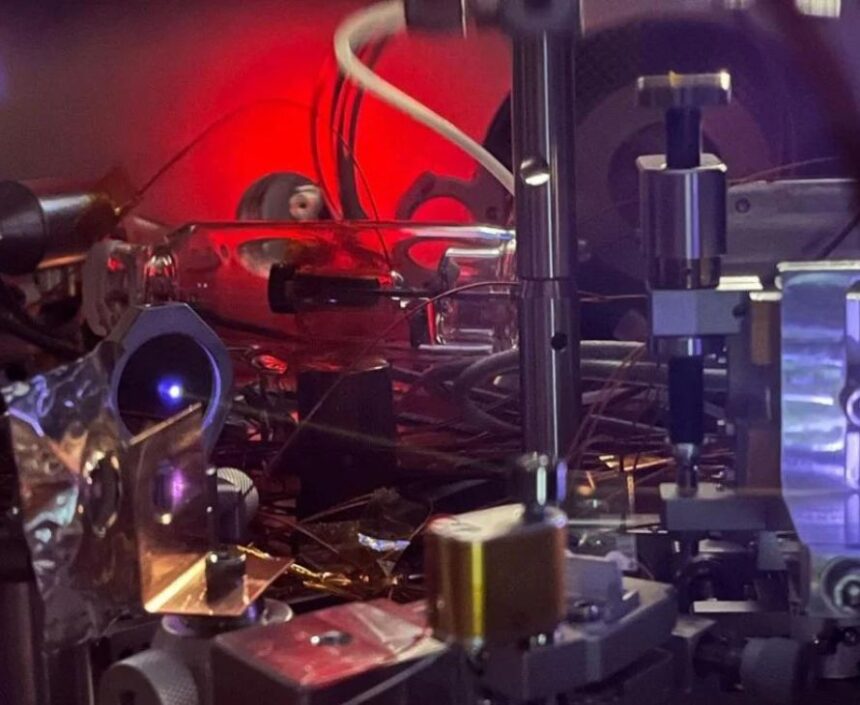
Photo: SCMP
SHARE

In the quest for greater precision in timekeeping, the development of an ultra-precise nuclear clock represents a significant milestone in both physics and technology. Recent advancements in this field have been propelled by the innovative research of Zhang Chuankun, a graduate student whose work has contributed to a leading laboratory in the United States. By honing in on laser frequency precision, Zhang is helping to refine timekeepers that could potentially challenge our fundamental understanding of physics.

Timekeeping has evolved rapidly over the years, from sundials to atomic clocks, and now to the next frontier: nuclear clocks. These timekeeping devices promise unprecedented accuracy, with the potential to measure time with a precision of one second over billions of years. Such accuracy can have profound implications across various fields, including navigation, telecommunications, and fundamental physics research.

Nuclear clocks operate on the principle of measuring the vibrations of atoms, particularly in their excited states. By observing these vibrations, scientists can achieve extremely stable and precise time measurements. The implications of such technology extend beyond practical applications; they could also provide insights into the fundamental laws of physics, including the nature of time itself.

Zhang Chuankun’s contribution

Zhang Chuankun’s research focuses on refining the laser frequency used to excite atomic nuclei in nuclear clocks. The precision of these lasers is critical, as even the slightest deviation can lead to significant errors in time measurement. Working alongside a team of experienced physicists at a leading research laboratory in the United States, Zhang has made remarkable strides in this area.

By developing advanced techniques for stabilizing laser frequencies, Zhang has enhanced the reliability and accuracy of nuclear clocks. His innovative approaches involve intricate control systems that fine-tune the laser light to precisely match the energy transitions of the atoms being studied. This level of precision is crucial for building nuclear clocks that can operate at their theoretical limits.

 Testing the foundations of physics

The implications of Zhang’s work extend far beyond the realm of accurate timekeeping. Ultra-precise nuclear clocks could serve as powerful tools for testing fundamental physical theories, including those related to gravity, quantum mechanics, and the potential variation of fundamental constants over time. By providing a more stable reference for measuring time, these clocks may help scientists explore questions about the constancy of physical laws and the nature of the universe.

For instance, researchers could use nuclear clocks to investigate whether the fine structure constant—an essential physical constant that characterizes the strength of electromagnetic interactions—remains constant throughout the cosmos. Such experiments could provide valuable insights into the validity of current physical theories and even lead to new discoveries.

 A collaborative future

Zhang’s remarkable contributions exemplify the collaborative spirit of scientific research, where ideas and innovations cross borders. As a Chinese researcher working within a U.S. laboratory, he underscores the importance of international cooperation in advancing scientific frontiers. This collaboration not only enhances the research environment but also fosters a diverse range of perspectives that can drive innovation.

The work of Zhang Chuankun and his colleagues represents a significant leap forward in the development of ultra-precise nuclear clocks. By pushing the boundaries of laser technology, they are not only advancing timekeeping but also opening new avenues for exploring the fundamental principles governing our universe. As research in this field continues to progress, the potential for groundbreaking discoveries remains immense, underscoring the vital role of young scientists like Zhang in shaping the future of physics and technology.

ALSO READ: China targets economic growth with $28 billion nuclear power investment in 11 new reactors

Decline of vultures in India: a hidden ecological crisis linked to half a million human deaths
Cape Town crime levels affecting children 
China’s solar industry at a crucial crossroads
Russian Scientists Develop Innovative Solar Panels: A Leap Towards Sustainable Energy
BRICS Parliamentary Forum is underway in St Petersburg, Russia
TAGGED:atomic clocksChinanuclear clocktechnologytime measurementstimekeepersZhang Chuankun
Share This Article
Facebook Flipboard Pinterest Whatsapp Whatsapp LinkedIn Tumblr Reddit VKontakte Telegram Threads Email Copy Link Print
What do you think?
Love0
Sad0
Happy0
Surprise0
Shy0
Joy0
Cry0
Embarrass0
Sleepy0
Angry0
Dead0
Wink0
Previous Article Today’s BRICS+ Numbers
Next Article India confirms first Mpox case
1 Comment
  • indicac~ao binance says:
    April 15, 2025 at 7:40 pm

    I don’t think the title of your article matches the content lol. Just kidding, mainly because I had some doubts after reading the article.

    Reply

Leave a Reply Cancel reply

Your email address will not be published. Required fields are marked *

Stay Connected

FacebookLike
XFollow
PinterestPin
InstagramFollow
YoutubeSubscribe
TiktokFollow
LinkedInFollow
TumblrFollow
ThreadsFollow
BlueskyFollow
RSS FeedFollow
- Advertisement -
Ad imageAd image

Latest News

China and Africa Launch Year of People-to-People Exchanges at AU Headquarters
Arts and Culture Features
A New Leader in the Electric Vehicle Race
Business and Finance Features
China’s Official Manufacturing PMI Contracts in January, Diverging from Private Survey Amid Mixed Economic Signals
Business and Finance Features
India’s Economic Momentum Endures, Strong Growth Forecasts, Benign Inflation Anchor Policy in Early 2026
Business and Finance Features

You Might Also Like

InternationalBRICS中国 (Zhōngguó)

Three dead in Shanghai knife attack on eve of China’s National Day Holiday

July 12, 2025
BRICSBusiness and Finance中国 (Zhōngguó)

Yuan’s global rise against US dollar

July 12, 2025
BRICS

BRICS plus: Here’s who wants to join the new world order

July 16, 2025
South African President Cyril Ramaphosa announces election date as 29 May 2024
South Africa

South African National and Provincial Elections Date Announced

February 21, 2024

Google Translate

Learn About BRICS

  • B – Brasil
  • R – Россия (Rossiya)
  • I – भारत (Bhārat)
  • C – 中国 (Zhōngguó)
  • S – South Africa
  • Saudi Vision 2030

Our World

  • Support Centre
  • Careers
BGTNBGTN
Follow US
© 2025 BRICS Global Television Network (Pty) Ltd. All Rights Reserved.
  • Privacy Policy
  • Terms and Conditions
Welcome Back!

Sign in to your account

Username or Email Address
Password

Lost your password?