
For decades, the U.S. dollar has been the cornerstone of global trade and finance, representing roughly 60% of all global currency reserves. However, the international monetary landscape is gradually shifting, as more countries recognize the influence that comes with controlling their own currency and seek alternatives to the dollar’s dominance.
One of the most prominent challengers is China’s yuan, although its rise has not yet matched China’s economic stature as the world’s second-largest economy and a manufacturing powerhouse. Since the early 2000s, the yuan has lagged behind not only the U.S. dollar but also other major currencies like the euro, British pound, and Japanese yen. As China is deepening trade ties with emerging markets and major economies, the yuan is being used more frequently in cross-border transactions, especially in energy deals and infrastructure projects under initiatives like the Belt and Road.
Another key factor influencing the move away from the US Dollar, is the increasing geopolitical tensions. U.S. sanctions on countries like Russia, Iran, and Venezuela have accelerated efforts to bypass the dollar. These nations have sought ways to insulate their economies from U.S. economic power by reducing their dollar reserves, trading in other currencies, or developing new financial systems. Inflation and growing U.S. debt have also raised concerns about the dollar’s long-term stability. The Federal Reserve’s aggressive monetary policies, particularly in response to the COVID-19 pandemic, have led to fears of inflationary pressures, further eroding confidence in the dollar.
The relationship between the U.S. and China is defined by both economic inter-dependence and strategic competition. As the two largest economies in the world, they are locked in a rivalry for global influence, with China’s rapid technological advancements and growing military power challenging the U.S.’s long-standing dominance. This competition spans various domains, from trade and innovation to geopolitical influence, particularly in Asia and Africa. Tensions have escalated over issues like trade imbalances, intellectual property, cybersecurity, and territorial disputes, leading to a recalibration of alliances and global strategies. Both nations see themselves as critical players in shaping the future world order, making their rivalry a defining feature of 21st-century geopolitics.
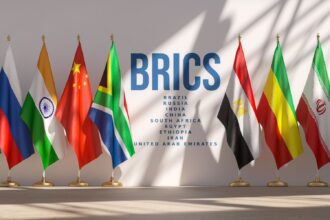
Changing global alliances are reshaping the currency dynamic. China has forged stronger ties with Russia and is actively collaborating with other major emerging economies, including those in the BRICS+ block. These nations share a common goal of reducing the U.S. dollar’s dominance in global trade and financial systems. There have been discussions within the BRICS+ bloc about developing a blockchain-based currency alternative, although this remains a long-term goal. In the meantime, the yuan is increasingly emerging as a preferred currency for international transactions among these countries.
The evolution of the yuan, or renminbi, reflects China’s rise as a global economic superpower. Initially a tightly controlled currency, the yuan has gradually opened to international markets since China’s economic reforms in the late 20th century. Over the past decade, Beijing has taken deliberate steps to increase the yuan’s global reach, including its inclusion in the IMF’s Special Drawing Rights (SDR) basket in 2016. Despite these efforts, the yuan’s global presence has been limited compared to the U.S. dollar.
However, geopolitical shifts, particularly China’s deepening ties with Russia, Iran, and other BRICS+ nations, have positioned the yuan as a potential alternative in global trade and finance. Future projections in studies suggest that while the yuan may not supplement the dollar anytime soon, its use in cross-border trade and financial markets will continue to grow, particularly in Asia and among nations seeking alternatives to Western-dominated systems.
Signs of the yuan’s growing influence have been evident in the past few years. In 2022, for the first time, the yuan surpassed the U.S. dollar in China’s cross-border commerce, accounting for 48% of transactions compared to the dollar’s 46.7%. This milestone signalled a significant step in China’s gradual de-dollarization efforts. Additionally, by the end of 2023, the yuan had become the most traded currency on the Moscow Exchange, capturing 42% of trades while the dollar’s share fell to 39.5%. Yuan trading volume surged to 34.15 trillion rubles ($385 billion), illustrating the currency’s increasing use in Russia amid geopolitical shifts.
This trend is likely to accelerate as nations like Russia, China, and Iran, many of which face Western sanctions, continue to seek alternatives to the dollar in response to financial isolation. The U.S. dollar still commands significant influence, backed by America’s position as the world’s largest economy and strong support from major allies in Europe, Japan, and South Korea.
While the U.S. dollar is not under immediate threat, de-dollarisation is gradually taking hold, particularly in emerging markets and sanctioned nations. The yuan is positioning itself as a key contender in the evolving financial order. Cryptocurrencies may also gain more prominence in the future, especially if China shifts its regulatory stance, which could further diversify global financial transactions.
ALSO READ: Egypt Officially Dumps US Dollar for Trade