David Smith, University of Sydney
Ohio Senator J.D. Vance, a zealous convert to Donald Trump’s cause, once offered an expansive vision of how Trump should rule in a second term: “fire every single midlevel bureaucrat, every civil servant in the administrative state, replace them with our people.”
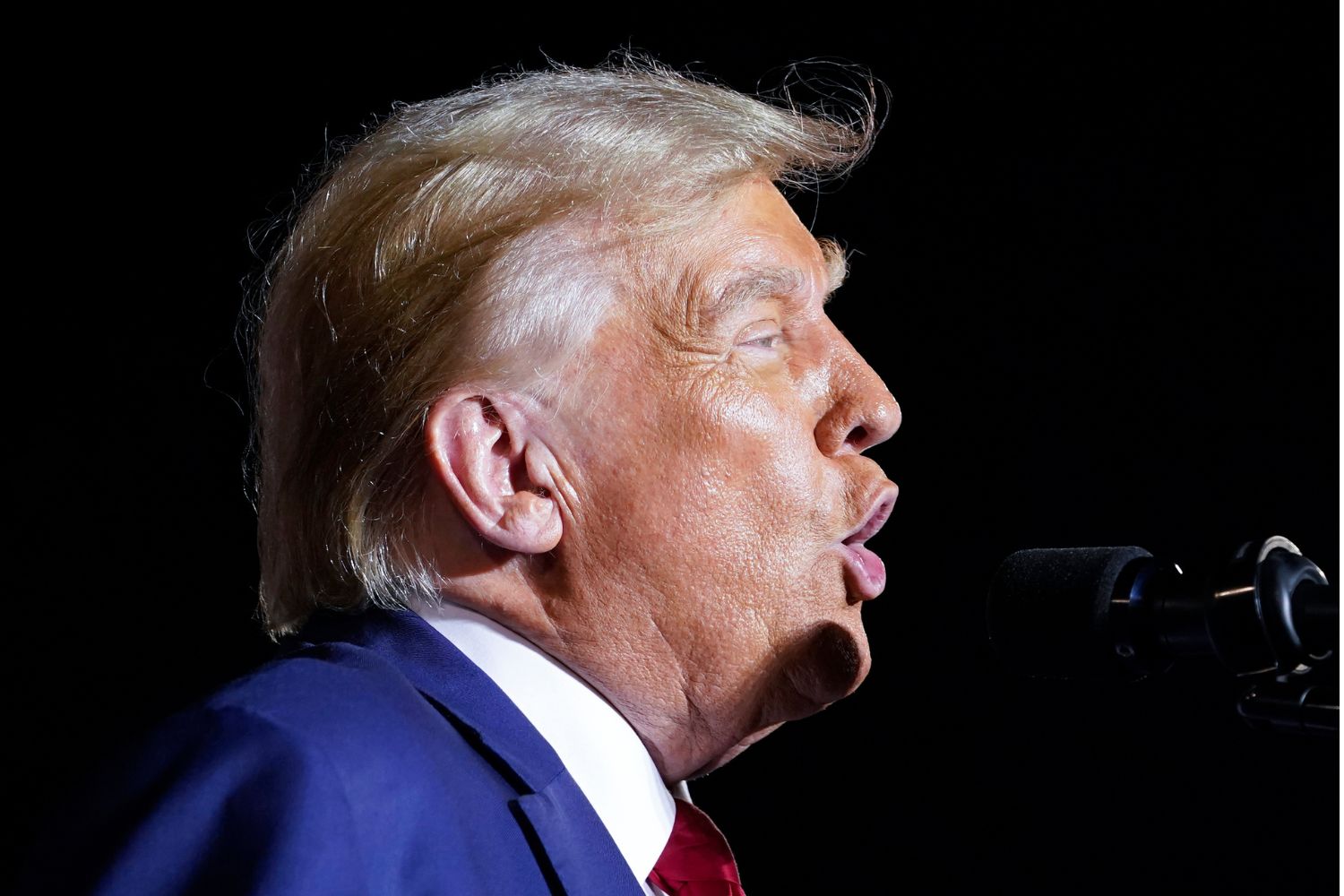
Polls a year out from the 2024 election suggest Trump has a good chance of winning it. If he does, he and his allies want to be ready to run the country in ways they were not in 2016.
For more than a year, groups supporting Trump have been publicising plans to fill government roles with proven Trump loyalists if he wins a second term.
Trump believes his first term was undermined by “deep state” bureaucrats, “weak” lawyers and even “woke generals”. Some of his opponents argue that government officials indeed acted as “guardrails” during Trump’s administration, saving the country from his worst instincts.
There seems to be a near consensus among Trump’s friends and foes that his authoritarian second term plans would require more cooperative government officials than he had last time around.
But how much could Trump genuinely reshape the United States government?
Theory of bureaucratic politics
In 1971, political scientist Graham Allison wrote Essence of Decision, an analysis of the Kennedy administration’s actions in the Cuban Missile Crisis. Allison argued that foreign policy decisions of the United States government could not be understood simply as rational responses to external situations.
Decisions are political outcomes resulting from complicated “games” played between different actors within the government.
Even in foreign policy, a domain where the US president has a lot of power compared to other areas of policy, the president needs help making decisions. Those decisions reflect bargaining between cabinet secretaries, military figures, diplomats and advisers, all of whom have their own interests and viewpoints.
One of the book’s earliest reviewers, the realist international relations scholar Stephen Krasner, was unimpressed by this analysis. He believed it would be popular with high-level policy-makers because it obscured their responsibility for the decisions they made.
In the end, Krasner argued, there is a single decision-maker in US foreign policy, and that is the president. Games may be played among the president’s staff and bureaucrats, but they are games whose rules are written by the president and whose players are chosen by the president.
Allison’s theory would resonate with those who imagine a “deep state” establishment thwarting the president’s agenda. Trump is not the first president to rail against entrenched opposition in his own administration, especially in foreign policy.
Barack Obama’s staff complained of “The Blob”, a militaristic establishment that included Obama’s secretary of defense. Other Democratic presidents also used blob-like metaphors.
Allison noted that John F. Kennedy described the State Department as “a bowl of jelly”, while Franklin D. Roosevelt said that trying to change anything in the Navy was “like punching a feather bed”.
But we should remember Krasner’s warnings that presidents and their allies would use bureaucratic opposition as an excuse for the shortcomings of systems they controlled. Trump was frustrated at times by appointees who ignored his orders or refused to carry them out because they were illegal.
But such people usually didn’t last long in the administration after colliding with Trump.
Trump’s administration set records for turnover among White House staff and Cabinet positions, and had a very high vacancy rate for Senate-confirmed appointments. By the end of his presidency, nearly anyone who disagreed with him was gone, and his Cabinet was filled with acting secretaries. This, he said, gave him “more flexibility”.
The inexperience and incompetence of Trump’s people were bigger problems for Trump in the end than disloyalty and opposition. Selecting high officials for their loyalty alone could be a recipe for another four years of domination without control.
ALSO READ: Biden, Xi compete for Asia-Pacific allies at summit
Smashing the administrative state
Trump’s allies have ambitions beyond enforcing loyalty to Trump, who can only serve one more term. His former Chief Strategist Steve Bannon called early in Trump’s first term for the “deconstruction of the administrative state”.
This may sound new and radical, but it broadly aligns with the aims of conservative policy ever since Roosevelt’s New Deal.
Congress delegates many of the powers of government to dozens of independent regulatory agencies such as the Environmental Protection Agency, the Consumer Finance Protection Bureau and the National Labor Relations Board.
These bodies are given the power to do things like setting and enforcing clean air standards, investigating and publishing consumer complaints over financial services, and conducting elections on union representation.
The legitimacy of these agencies has long been attacked by conservatives, who believe they bypass legislatures to advance liberal policy goals.
Lawyers in the Reagan and Bush administrations developed the theory of the “unitary executive”, which asserted the right of the President to fire uncooperative civil servants and questioned the constitutionality of independent government agencies.
Towards the end of his presidency, Trump signed an executive order to create Schedule F, which would reclassify tens of thousands of career civil servants as political appointees, stripping them of their employment protection.
Biden rescinded the order a few days into his presidency, but Trump’s allies now see it as the key to finally taking control of the administrative state.
Their stated aim is to remove public servants likely to obstruct Trump’s agenda and replace them with people committed to it. This would theoretically increase the president’s power.
However, the long term effect of flooding the civil service with thousands of political appointees hostile to government would be to reduce the capacity of all government, regardless of the president.
The quality of government services would degrade, and public faith in government would further erode.
Not all conservatives like this plan. Some warn it would return America to the “spoils system” that existed before the neutral civil service, where public sector jobs were rewards to be doled out to political supporters.
But the conservative ascendancy now belongs to those who can best align their ideologies with Trump’s grievances.
ALSO READ: China’s G20 snub takes centre stage as Biden jets off to India
Control is still an illusion
The activist conservative think-tank Heritage Foundation boasts that “the left is right to fear our plan to gut the federal bureaucracy”. The mass firing of political enemies fits well with Trump’s focus on “retribution”.
But Heritage and other organisations are selling an illusion that is likely to leave Trump or any other president frustrated. https://www.youtube.com/embed/-ADS72l4tl4?wmode=transparent&start=0
It’s easy to blame scheming bureaucrats and administration “traitors” for the failures of Trump’s first term. The reality is that all recent presidents have faced the same intractable problem: it is increasingly difficult to get any major legislation through a polarised Congress.
It is the failure to legislate that forces presidents to rely on inherently flimsy executive orders.
Trump also had the problem that much of what he wanted to was illegal. While his allies are now searching for administration lawyers who “are willing to use theories that more establishment lawyers would reject”, Trump would also need the cooperation of judges to implement plans such as “strong ideological screening” of immigrants.
The hundreds of judges that Trump appointed to federal courts, including three Supreme Court justices, have certainly made it easier to pursue a conservative political agenda. But they wouldn’t help Trump when it came to the issue he cared about most: overturning the results of the 2020 election.
Trump may find that the lifetime appointments from his first term have created a new conservative legal establishment that can help his allies but is at odds with his personal ambitions.
Various biographers of Trump have suggested he will never be satisfied with any level of power or prestige. He is unlikely to get what he wants out of a second term in the White House. But plenty of others will see it as a great opportunity to settle longstanding scores.
David Smith, Associate Professor in American Politics and Foreign Policy, US Studies Centre, University of Sydney
*This article is republished from The Conversation under a Creative Commons license. Read the original article.